
‘Exceptional’ heat tipped to raise fire risk
Significant bushfires are “a real possibility” in southwest Victoria and East Gippsland in January and February, while much of Tasmania and parts of NSW face heightened risks, a seasonal outlook warns.
In Victoria, spring rainfall will limit forest fire activity next month, but an “exceptionally warm” summer from January will probably lead to a rapid switch in forest flammability, the Australasian Fire and Emergency Service Authorities Council (AFAC) warns.
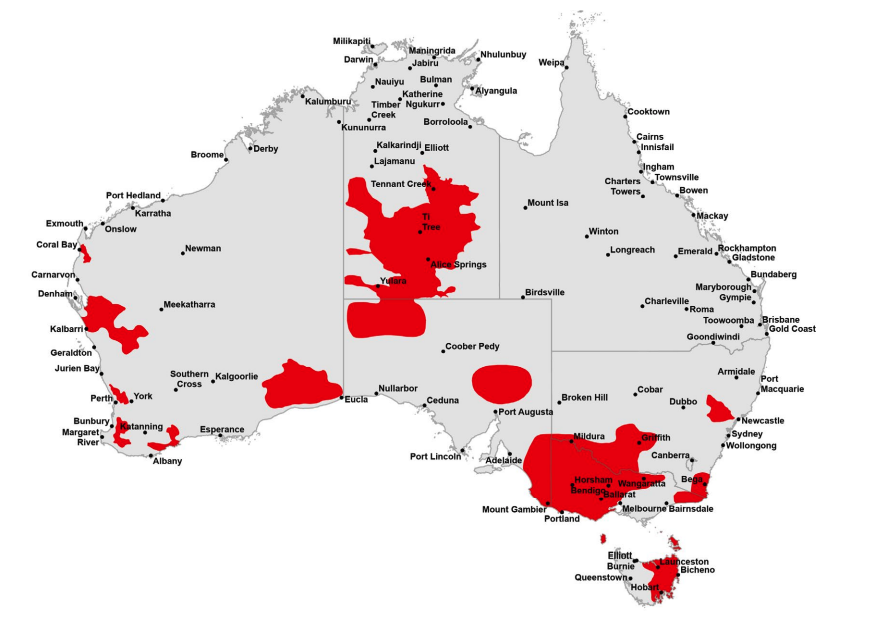 The AFAC summer bushfire outlook shows areas of heightened risk
Victoria received above-average rainfall last month, with widespread falls of 100-200mm, but winter-spring deficits were recorded across the southwest and East Gippsland.
The AFAC summer bushfire outlook predicts a heightened risk for eastern Tasmania, parts of WA and SA, large parts of the NT and Victoria, and the NSW Hunter, southeastern and southwestern regions due to low soil moisture, high fuel loads and forecast dry conditions.
Regions at increased risk include Flinders Island, where a fire that started on November 19 has damaged or destroyed eight structures and burnt about 15,320 hectares, according to updates today.
In NSW, the Hunter and the southeast are of “particular concern”, with long-term rainfall deficiencies expected to persist even if average falls are received.
“Forested areas in these regions also contain significant amounts of vegetation, with dense and continuous fuels that could support more intense fire activity,” the outlook says.
“Where fires start in these dry conditions, particularly during periods of elevated fire danger, they have the potential to spread rapidly, become intense and be difficult for firefighters to control.”
The heightened bushfire potential in Tasmania extends across the northeast, east coast, midlands, southeast and Tasman Peninsula. Closer to normal conditions are expected in the west, but AFAC still warns of risks.
“Periods of extreme fire danger remain possible across all parts of the state when hot, dry and windy conditions develop,” it says. “With prevalent dry fuels, these conditions can result in fast-moving and difficult-to-control fires, particularly across eastern Tasmania.”
The outlook is here.